Thinking about upgrading your kitchen but worried about how quickly costs can spiral? You’re not alone. Across Ireland, homeowners are rethinking how they renovate looking for smarter ways to improve their homes without overcomplicating the process or overspending. That’s exactly where minimalist kitchens are making an impact. They’re not just visually appealing; they’re practical, efficient, and surprisingly cost-conscious when done right.
In this guide, we’ll walk through how a minimalist approach can transform your kitchen, helping you make better design decisions, avoid common renovation pitfalls, and ultimately get more value from your budget.
- Minimalist Kitchens: Smart Kitchen Renovation Ideas
- It Starts With a Shift in Thinking, Not Just Design
- Why This Approach Works So Well in Irish Homes
- The Hidden Cost of “Stuff” (And Why Less Really Does Save More)
- Where Minimalism Doesn’t Cut Corners: Storage and Layout
- Choosing Materials That Still Make Sense Five Years From Now
- So, Is a Minimalist Kitchen the Right Move?
Minimalist Kitchens: Smart Kitchen Renovation Ideas
If you spend any time looking into kitchen renovations in Ireland, you’ll quickly notice a pattern. Costs climb fast, decisions get overwhelming, and somewhere along the way, what started as a simple upgrade turns into a full-blown project that eats both your budget and your patience.
That’s exactly why minimalist kitchens have been quietly gaining traction—not as a trend driven by aesthetics, but as a practical response to how people actually live today.
Because when you strip away the buzzwords and Pinterest boards, most homeowners want the same thing: a kitchen that feels bigger, works better, and doesn’t cost more than it should.
Minimalism, when done properly, delivers all three.
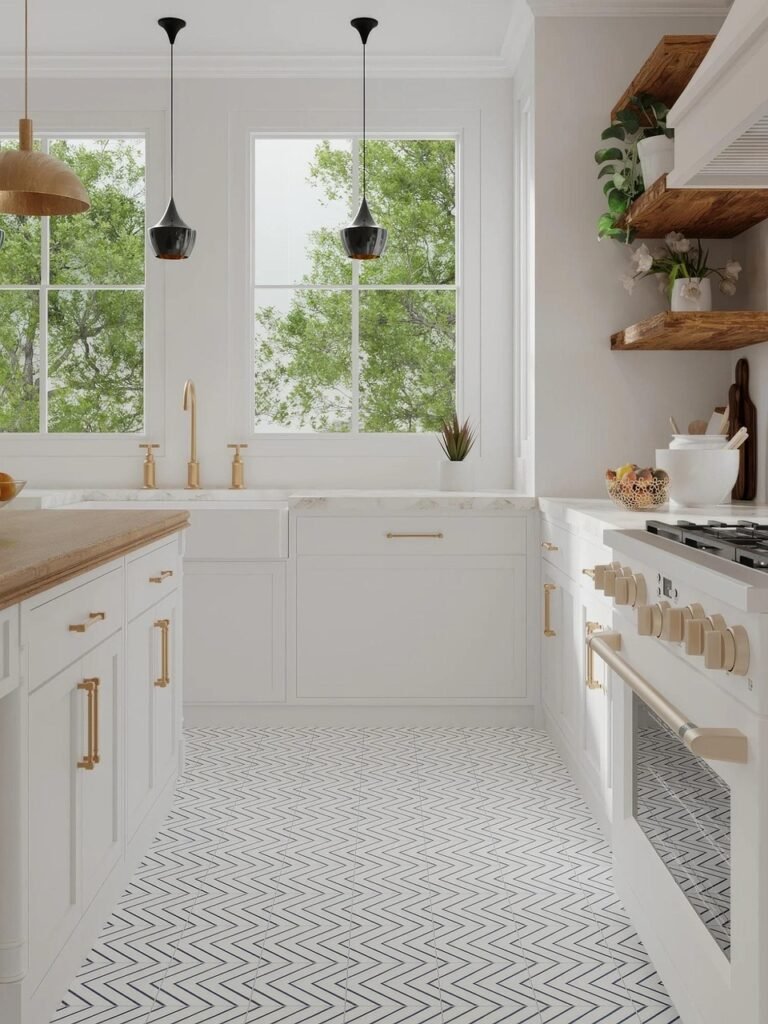
Classic Luxurious FarmhouMinimalist kitchen in an Irish home with white cabinets, light wood finishes, and natural light creating a clean and spacious feelse-style minimalist Kitchen
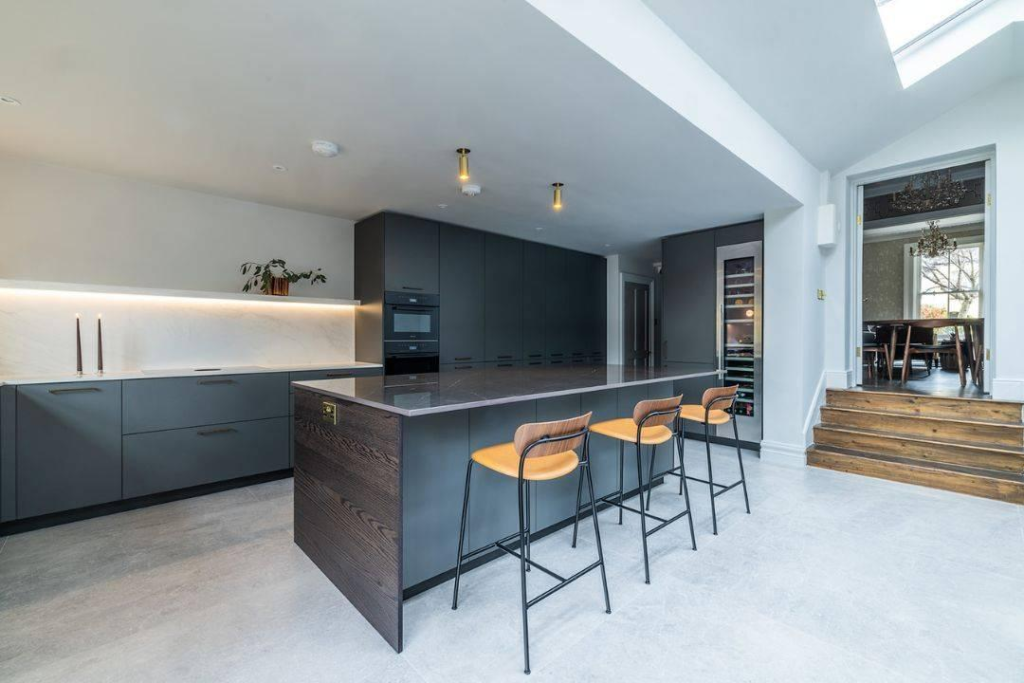
Modern minimalist kitchen with dark cabinets, matte black finishes, and warm lighting creating a sleek and contemporary space – Tilestyle
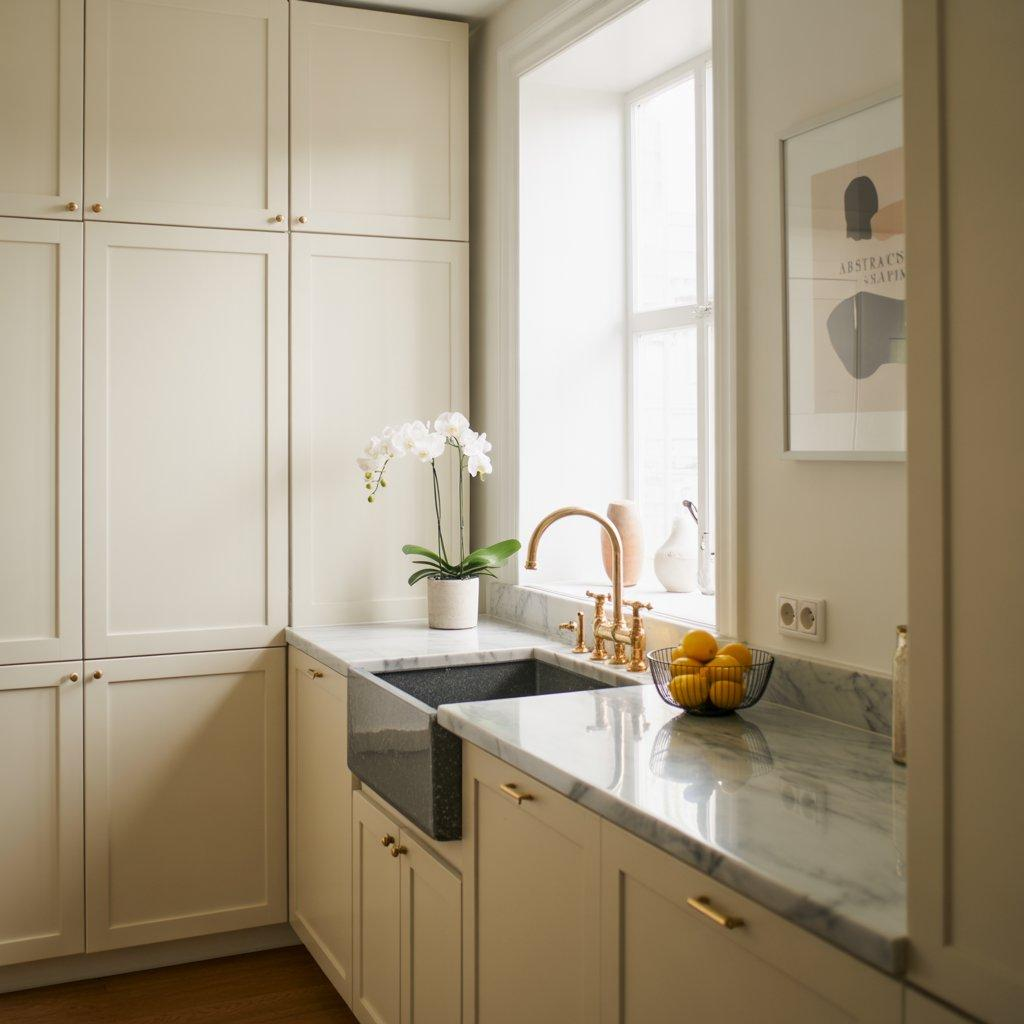
Small minimalist kitchen with neutral tones designed to maximise natural light in a compact Irish home – Aloco Kitchens
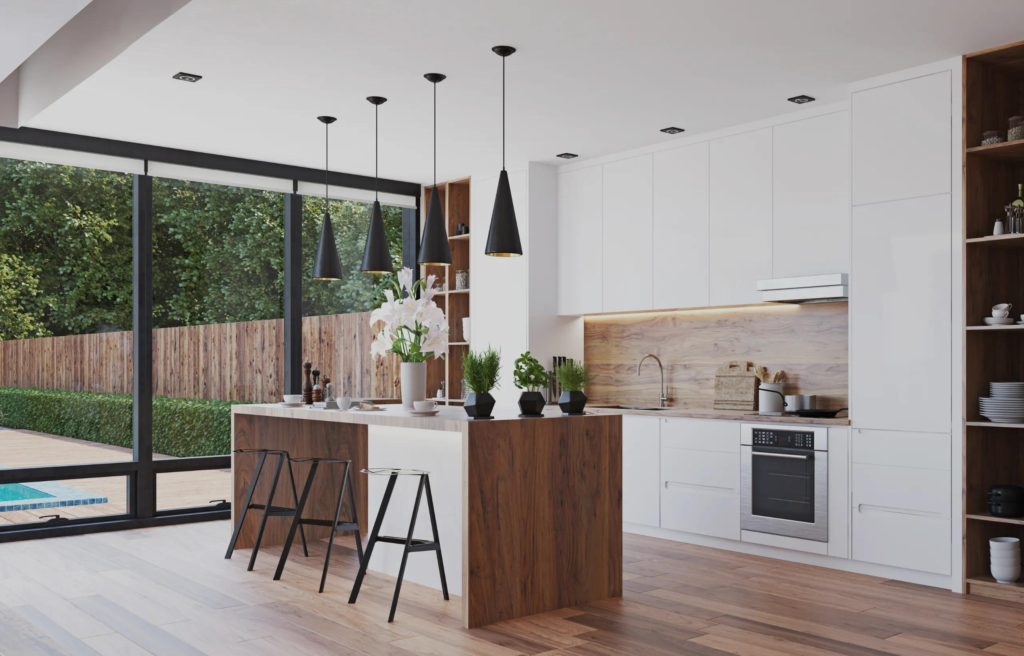
Modern minimalist kitchen with white handleless cabinets, warm wood island, and black pendant lighting, featuring large glass doors that bring in natural light and connect to an outdoor garden space – Renovation Dublin
It Starts With a Shift in Thinking, Not Just Design
One of the biggest misconceptions about minimalist kitchens is that they’re about removing things. In reality, they’re about making better decisions.
In a typical renovation, it’s easy to fall into the trap of adding more—more cabinets, more finishes, more features—because it feels like you’re getting value. But those decisions add up quickly, not just in cost, but in complexity.
What minimalist design does is force a different question:
Do I actually need this?
And once you start asking that, the entire renovation changes direction.
Instead of spreading your budget thin across dozens of elements, you begin focusing on the few things that genuinely matter: layout, storage, durability. The result is often a kitchen that not only looks cleaner, but also feels more intentional and far easier to live with over time.
Why This Approach Works So Well in Irish Homes
There’s a reason minimalist kitchens seem to fit naturally into Irish homes, and it has very little to do with trends.
Many properties, and especially older ones, were built with smaller kitchens, lower ceilings, and layouts that weren’t designed for modern living. Add in limited natural light and you’ve got a space that can feel tight no matter how much money you throw at it.
This is where minimalism becomes more than just a style choice.
By simplifying the visual elements—lighter colours, cleaner lines, fewer interruptions, you create a sense of space that isn’t physically there, but feels real when you’re in it. And importantly, you achieve that without needing to knock walls down or extend the house.
For most homeowners, that’s the difference between a manageable renovation and a major financial commitment.
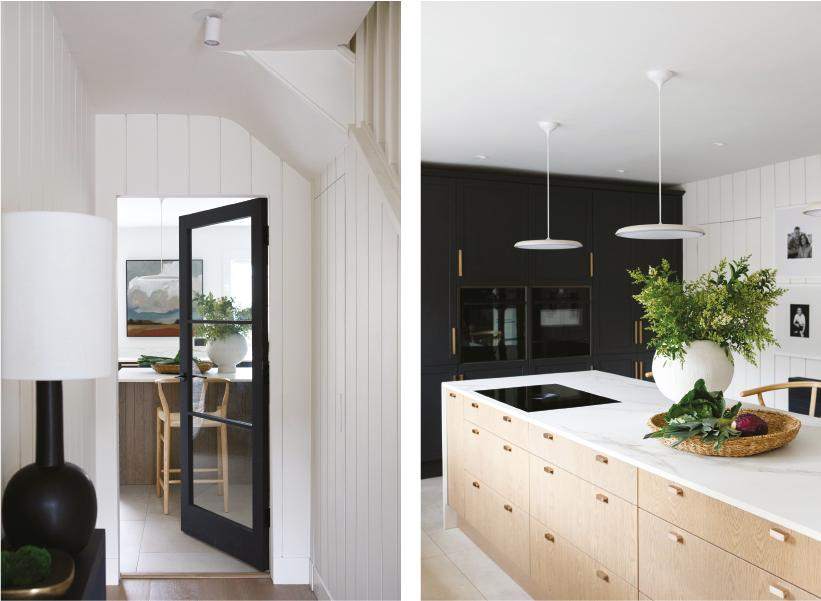
Contrast of minimalist kitchen designs featuring a bright white kitchen with natural wood accents and a modern dark kitchen with black cabinetry and island. House and Home – Project by Marina Slattery and Barbara Houlihan
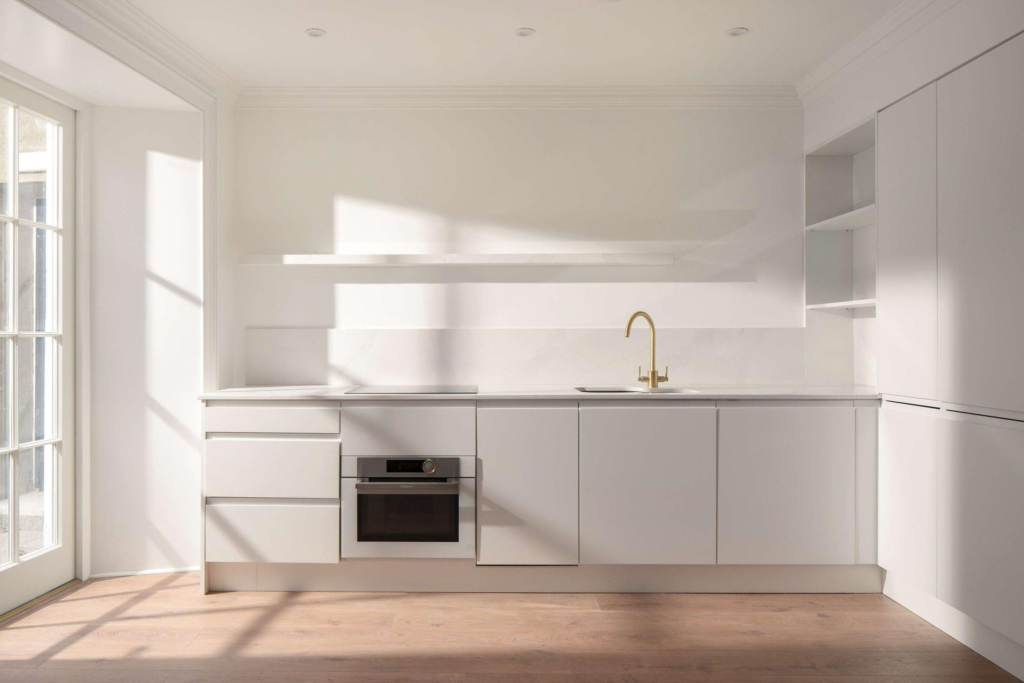
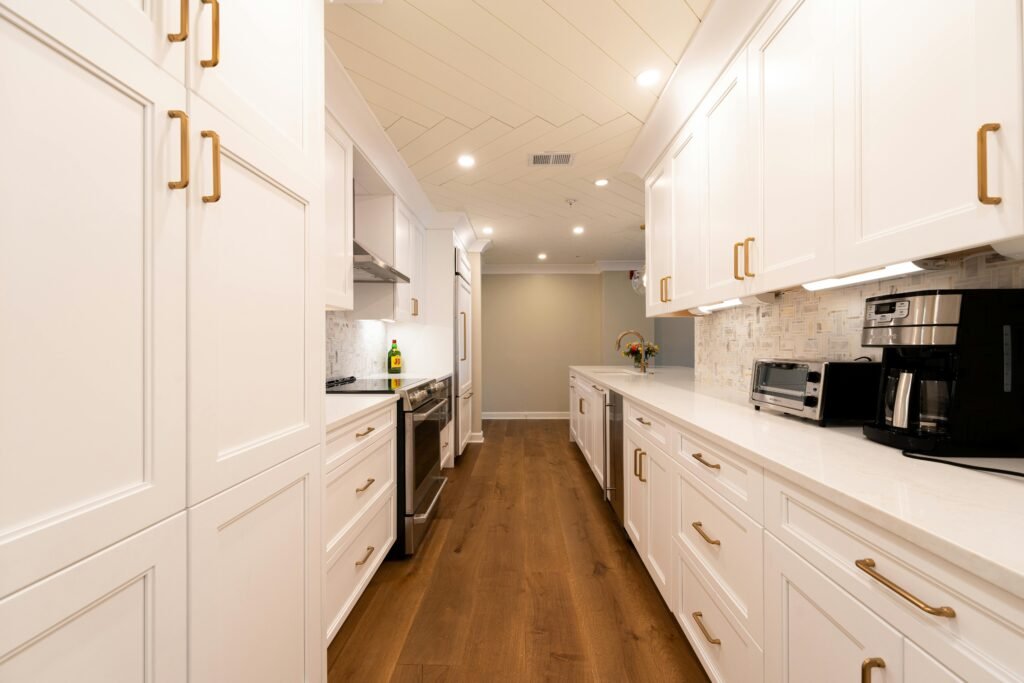
Small minimalist galley kitchen with white cabinets, light wood flooring, and large window bringing in natural light. Project: The Residence – Planonline.ie
The Hidden Cost of “Stuff” (And Why Less Really Does Save More)
There’s something rarely discussed in renovation planning: clutter has a direct cost.
Every extra appliance, every unused gadget, every “just in case” item eventually demands space. And space, in a kitchen, is one of the most expensive things you can design for.
More items lead to more cabinetry. More cabinetry leads to higher material costs, longer installation times, and more complicated layouts. Before you know it, your budget has stretched far beyond what you originally planned.
Minimalist kitchens break that cycle.
By designing around what you actually use, not what you might use, you naturally reduce the need for excess storage. And when storage becomes more efficient rather than more abundant, the entire kitchen becomes simpler and more cost-effective.
There’s also a lifestyle shift that comes with this. A kitchen without clutter isn’t just easier on the eye—it’s easier to clean, easier to organise, and far less stressful to use on a daily basis.
That’s something you don’t fully appreciate until you’ve lived with it.
Where Minimalism Doesn’t Cut Corners: Storage and Layout
If there’s one area where minimalist kitchens actually demand more thought, not less, it’s storage.
Because when everything is meant to be out of sight, what’s behind the cabinet doors matters even more.
This is where smart design comes into play. Deep drawers that allow you to see everything at a glance. Pull-out pantry units that make use of vertical space. Built-in organisers that eliminate the need for cluttered shelves.
These aren’t luxury add-ons—they’re what make the entire concept work.
For Irish homes, particularly older ones with awkward layouts, investing in this kind of storage can transform how the kitchen functions. It removes friction from everyday tasks and replaces it with something that feels smooth and intuitive.
And while it may require a slightly higher upfront investment, it’s one of those decisions that pays off every single day after the renovation is finished.
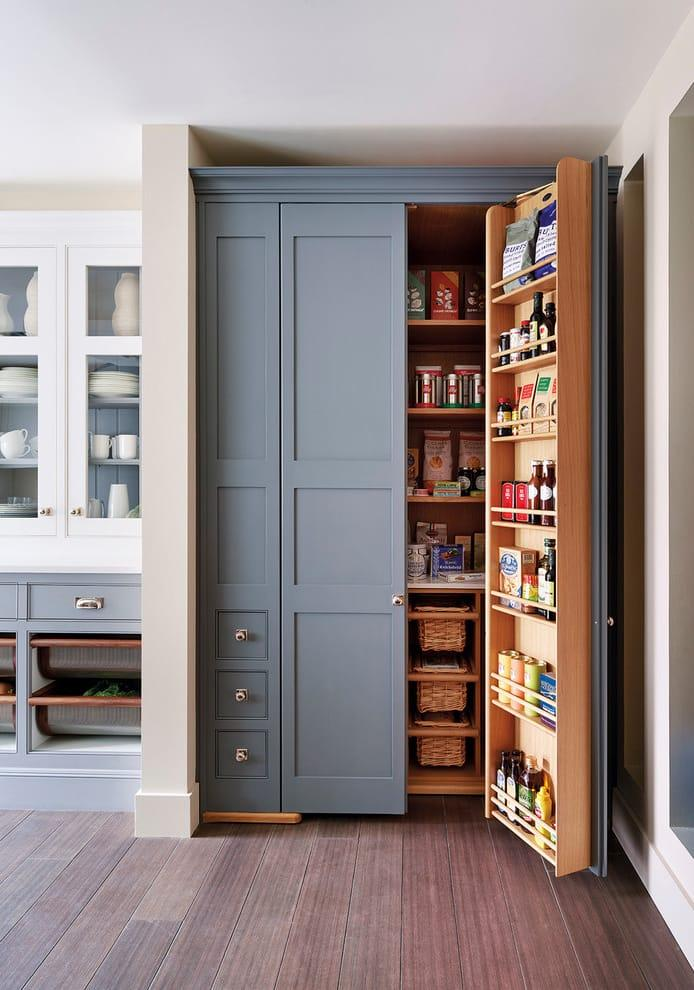
Built-in kitchen pantry with pull-out door storage and shelves, designed for efficient organisation in a modern home – Arlene Mejia Blog
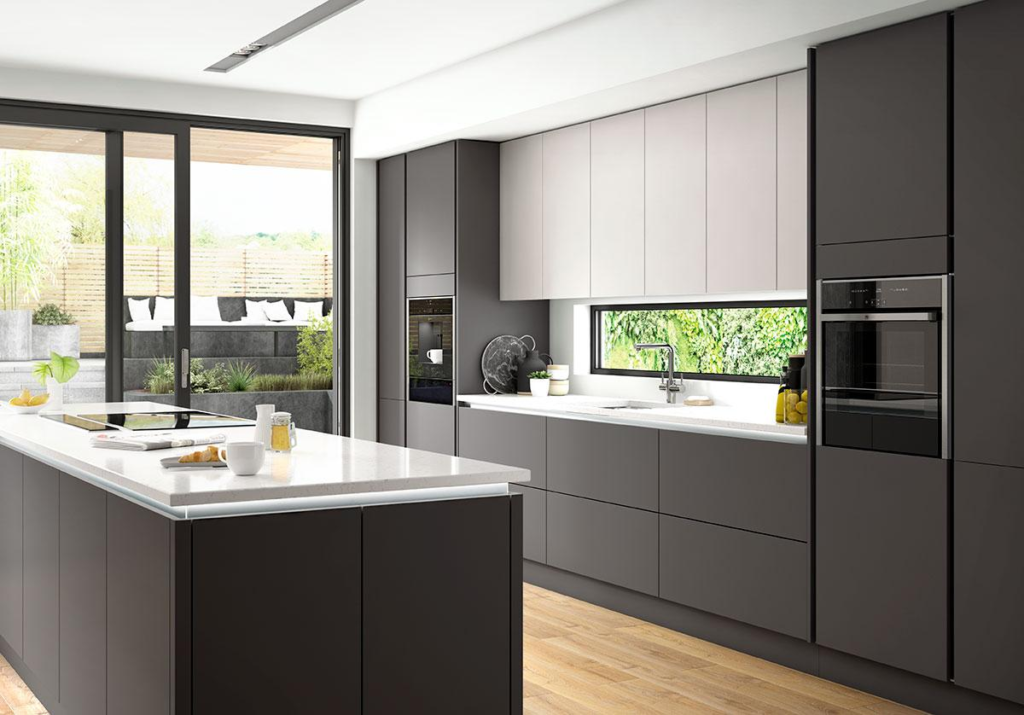
Contemporary kitchen design with matte dark handless cabinetry, built-in appliances, and central island in a bright open-plan space – Project in walkinwardrobes
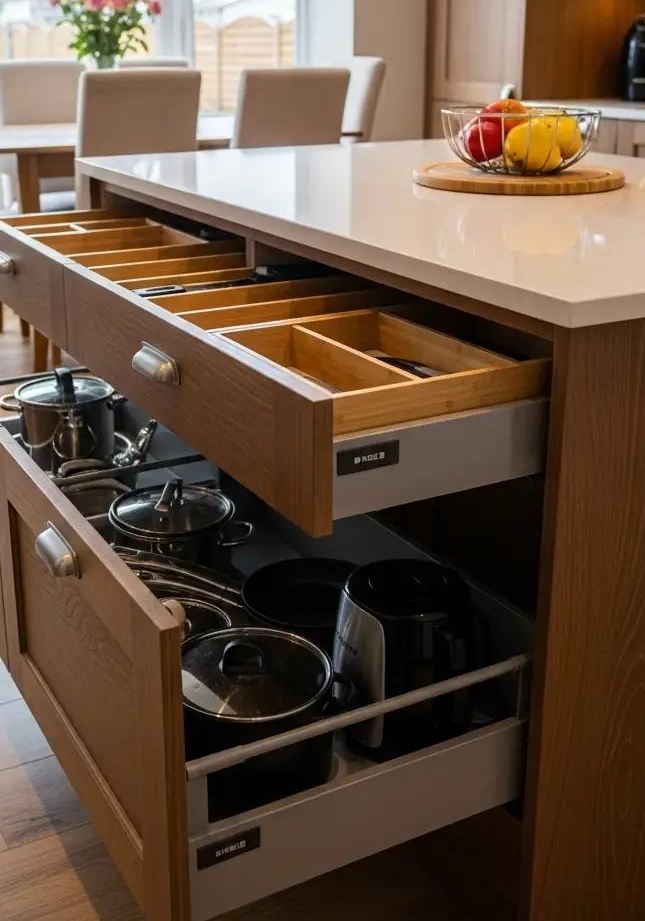
Smart kitchen storage solution with pull-out deep drawers and internal dividers, maximising space and organisation in a contemporary home
Choosing Materials That Still Make Sense Five Years From Now
Trends come and go quickly in kitchen design, and nowhere is that more obvious than in bold colours and statement finishes that look great for a year or two before starting to feel dated.
Minimalist kitchens take a different approach by leaning into materials that are subtle, durable, and unlikely to fall out of favour.
Quartz worktops, for example, offer both longevity and a clean, understated look. Matte cabinetry avoids the glare and wear that glossy finishes often show. Light wood accents bring warmth without overwhelming the space.
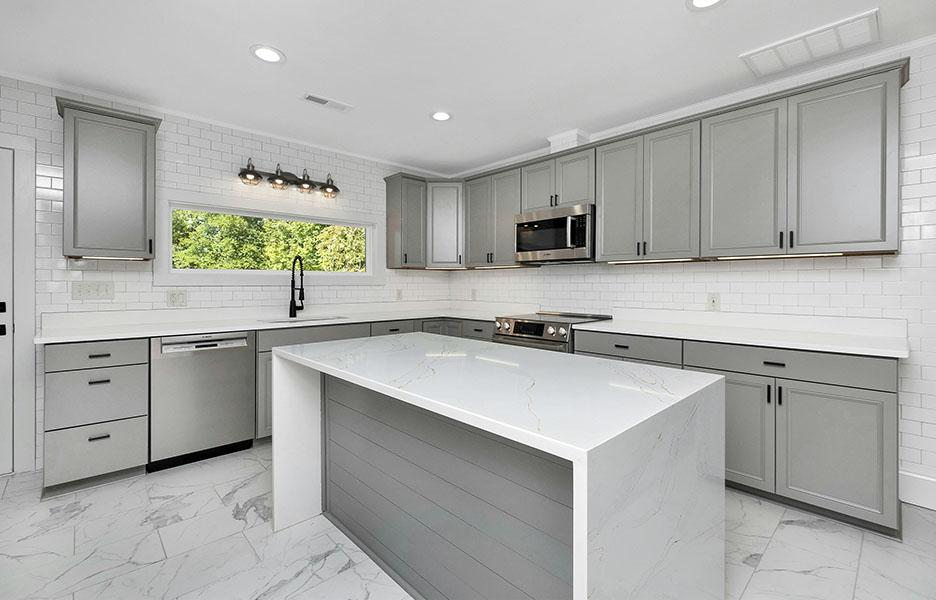
Modern kitchen with light grey shaker cabinets, white quartz island and countertops, and white subway tile backsplash, featuring stainless steel appliances and marble-effect tiled flooring. Material by kitchenworktops
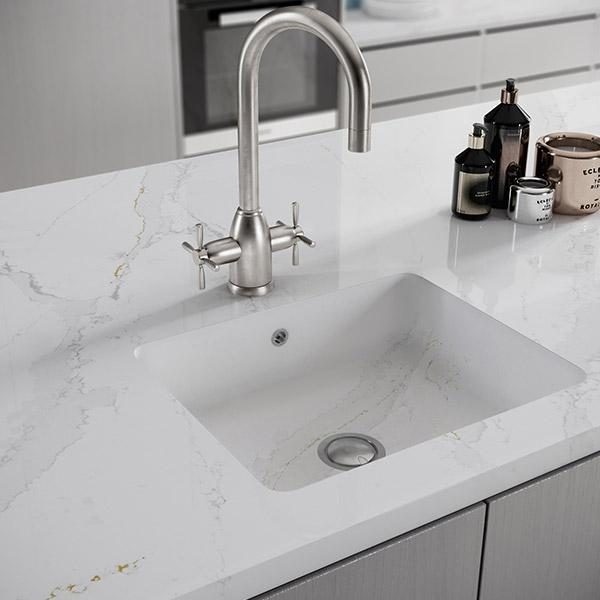
Modern kitchen sink with integrated quartz worktop, featuring a brushed nickel faucet and minimalist design finish. Silestone by Cosentino from panellingcentre.ie
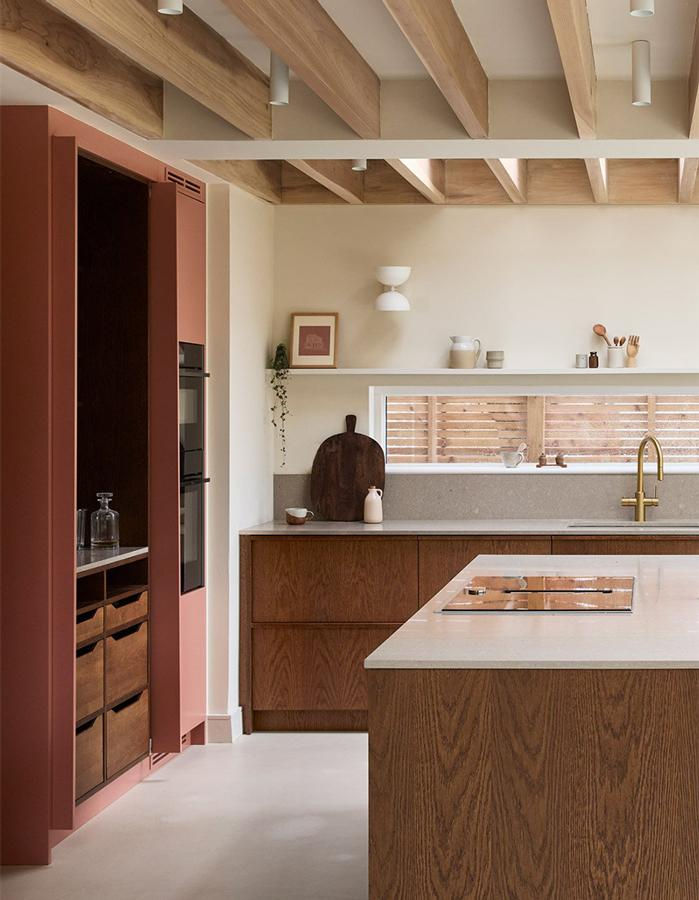
Modern minimalist kitchen with natural wood cabinets, exposed timber ceiling beams, and quartz island with integrated hob. Scandi Style Kitchens from The Gloss Magazine
These choices might not feel as exciting in the moment, but they have something far more valuable: staying power.
And when you consider the cost and disruption of replacing a kitchen, that kind of longevity becomes a major advantage.
So, Is a Minimalist Kitchen the Right Move?
At the end of the day, a kitchen renovation isn’t just about creating something that looks good. It’s about building a space that works for your life, your budget, and your home.
Minimalist kitchens aren’t the right choice for everyone, but for many Irish homeowners, they offer a balance that’s hard to ignore.
They reduce unnecessary spending without sacrificing quality. They make smaller spaces feel more generous. And perhaps most importantly, they create an environment that feels calm and manageable in everyday life.
And in a world where renovations can quickly spiral out of control, that kind of simplicity isn’t just appealing, it’s smart.
If you’re at the early stage of planning, the next step is understanding what this might cost in your specific situation. Kitchen renovations in Ireland can vary wildly depending on layout, materials, and labour.
If you want, we can break down realistic kitchen renovation costs in Ireland, or help you map out a budget before you commit to anything.